
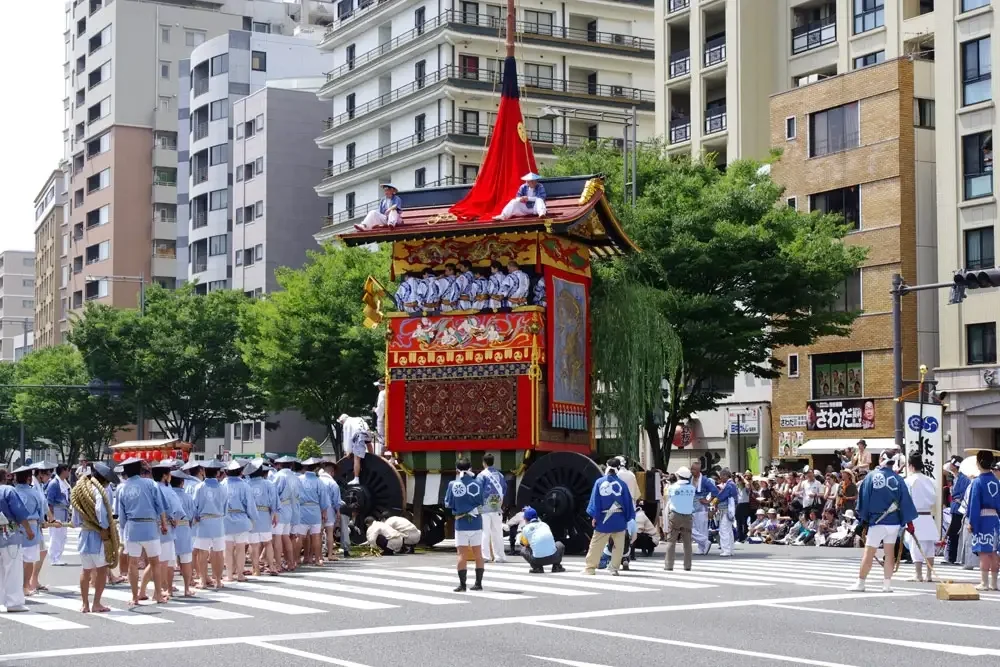
On a warm July evening in Kyoto, lanterns glow softly along historic streets, the rhythmic beat of traditional drums fills the air, and massive wooden floats slowly move through crowds of excited spectators. Locals dressed in colorful yukata stroll between food stalls while centuries-old rituals unfold in the heart of the city.
Welcome to Gion Matsuri, one of Japan’s most spectacular and historic festivals.
Held every July in Kyoto, the Gion Matsuri Festival is a month-long celebration featuring grand parades, traditional performances, street food, and cultural ceremonies. Dating back more than 1,150 years, it is widely considered one of the three greatest festivals in Japan.
For travelers visiting Japan in summer, experiencing the Gion Matsuri Festival in Kyoto is a once-in-a-lifetime cultural event.
What Is the Gion Matsuri Festival?
The Gion Matsuri is an annual festival of Yasaka Shrine in Kyoto, celebrated throughout the entire month of July.
The festival began in 869 AD during the Jogan plague epidemic, when people held rituals to appease the gods and stop a devastating epidemic.
Over centuries, the ritual evolved into a grand festival with elaborate floats known as Yamaboko, traditional music, and street celebrations.
Key Festival Facts
- Held annually in July
- Over 1 million visitors attend each year
- One of the Three Great Festivals of Japan
- Recognized by UNESCO as Intangible Cultural Heritage
Source: Kyoto City Tourism Bureau, UNESCO
Why Gion Matsuri Is One of Japan’s Most Famous Festivals
The festival is famous for its massive decorative floats, some of which reach 25 meters (82 feet) in height and weigh up to 12 tons.
These floats are constructed without nails using traditional Japanese carpentry techniques.
Each float is decorated with:
- antique tapestries
- handcrafted wood carvings
- historic fabrics imported from Asia and Europe
Because of their beauty and historical value, the floats are sometimes called “moving museums.”
Main Events of the Gion Matsuri Festival
Yamaboko Junko – The Grand Float Procession
The highlight of the festival is the Yamaboko Junko, the famous float parade through central Kyoto.
It takes place on two dates:
- July 17 – Main parade
- July 24 – Second parade
During the parade, huge floats are pulled through the streets of Kyoto by teams of men using thick ropes.
Each float represents a different neighborhood and carries musicians playing traditional Gion festival music called Gion-bayashi.
Yoiyama – The Festival Street Nights
The nights before the parade are known as Yoiyama, when the streets transform into a giant cultural street festival.
During Yoiyama:
- Major streets close to traffic
- Hundreds of Japanese street food stalls open
- Lanterns illuminate the floats
- Locals wear yukata summer kimono
Popular foods include:
- Takoyaki
- Yakitori
- Okonomiyaki
Best Places to Watch the Gion Matsuri Parade
If you want the best views of the Kyoto float procession, these locations are ideal:
Kawaramachi Street
One of the busiest viewing areas with vibrant crowds.
Shijo Street
Offers excellent views of floats making dramatic turns.
Oike Street
More spacious and easier to find viewing spots.
Travel tip: arrive 2–3 hours early for the best viewing locations.
Comments 0